
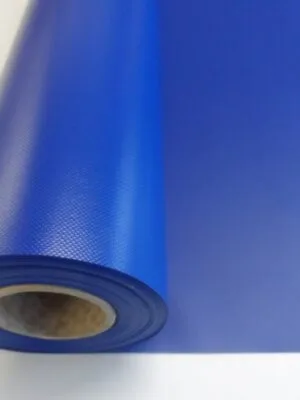
Geomembrane Liners
PVC Potable Water Liner - Certified for Drinking Water Storage
720 g/m² polyester-scrim reinforced PVC geomembrane in a food-grade formulation certified for direct potable water contact. For municipal reservoirs, community water storage and drinking water infrastructure where liner chemistry compliance is a regulatory requirement.
Overview
The 720 g/m² potable grade is a reinforced PVC geomembrane manufactured in a food-grade formulation certified for direct contact with drinking water. Structurally it matches the 700 g/m² general-purpose grade - 1,600 N/50 mm tensile, 0.75 mm thickness, polyester scrim reinforcement, hot-air welded seams, 10 to 15 year service life - but the formulation is verified potable-safe, which is what makes it specifiable for a potable supply.
This is a compliance product. Where a reservoir feeds a drinking water network, the liner formulation is subject to regulatory approval and a general-purpose grade cannot be substituted regardless of its mechanical performance. Supplied in blue or white rather than black, consistent with potable water practice.
Geosynthetics Africa supplied and installed the potable reservoir lining at Rustenburg Municipality, and delivers across 30+ African countries with installation by our own IAGI-aligned crews under full weld testing and photographic QA/QC.
- MaterialFood Grade Plasticised PVC - woven polyester scrim reinforced
- Structure6-layer construction - PVC top/base layers with woven polyester textile reinforcement · gloss finish both faces
- ColourLight grey / off-white (standard potable grade)
- StandardAS/NZS 4020 (Australian Water Board - potable water contact) · SANS 1421 · ISO 4674 · ISO 2411
- Roll Width3 m wide
- Roll Length50 m per roll (150 m² per roll)
Typical Properties
| Property | Test Method | Unit | Typical Value |
|---|---|---|---|
| Product Code | - | - | R-PVC720P |
| Product Weight | - | g/m² | 720 |
| Approximate Thickness | - | mm | 0.58 - 0.62 |
| Tensile Strength - Warp | SANS 1421:1998 | N/50mm | 2,500 |
| Tensile Strength - Weft | SANS 1421:1998 | N/50mm | 2,200 |
| Tear Strength - Warp | ISO 4674-1:2016 Method B | N | 300 |
| Tear Strength - Weft | ISO 4674-1:2016 Method B | N | 250 |
| Weld Adhesion | ISO 2411:2017 | N/25mm | 40 |
| Fusion Test | 5 min in Acetone | - | No flaking |
| Base Fabric | - | - | Woven Polyester |
| Potable Water Approval | AS/NZS 4020 | - | Australian Water Board approved |
| Roll Width | - | m | 3 |
| Roll Length | - | m | 50 |
Note: The above values are typical and not intended for specification purposes. Please refer to the product datasheet for full details.
Typical Applications
View all applicationsMining Systems
PVC geomembranes are suitable for process water storage ponds and mine water management reservoirs where chemical compatibility with PVC has been confirmed. Not recommended for primary containment of acidic process solutions, heap leach pads or TSF base liners - HDPE is the governing specification for those applications. Chemical compatibility must be verified against the specific fluid before specification.
Water Containment
The primary PVC application. Specified for farm dams, irrigation storage reservoirs, aquaculture ponds, community water storage and municipal infrastructure. The 720gsm potable water certified grade is the specified product for drinking water storage. Cost-competitive and well-proven across South African agricultural and civil water containment projects.
Waste & Landfills
Reinforced PVC may be suitable for leachate holding ponds and wastewater lagoons where fluid chemistry falls within PVC's resistance envelope and UV exposure is a primary design condition. Chemical compatibility must be confirmed against the specific leachate or effluent profile before specification - contact our technical team.
Compatible Systems
View all systems550gsm Reinforced PVC
Entry-level reinforced grade for small to medium agricultural dams, farm ponds, irrigation storage and temporary containment. Cost-efficient specification where subgrade is well-prepared and mechanical demand is low. Not recommended for large exposed reservoirs or high-stress applications.
700gsm Reinforced PVC
Mid-weight grade balancing cost and performance for standard irrigation reservoirs, aquaculture ponds and mid-sized agricultural dams. Improved tear and tensile performance over 550gsm - the most commonly specified grade for general farm dam lining across South Africa
720gsm Reinforced PVC - Potable Water Certified
Food-grade PVC formulation certified for direct potable water contact. Specified for municipal water storage, community reservoirs and drinking water infrastructure where liner chemistry compliance is a regulatory requirement. Same structural performance as the 700gsm grade with a verified potable-safe formulation.
800gsm Reinforced PVC
Heavy-duty grade for large-scale agricultural schemes, commercial irrigation reservoirs and moderate industrial water containment. Higher mass-per-unit-area delivers improved puncture resistance and dimensional stability under hydrostatic load and wind uplift on large unsupported spans.
Installation Guidance
Standard Method Statement
Subgrade preparation for reinforced PVC follows the same fundamentals as all geomembrane installations: the substrate must be smooth, compacted, and free of protrusions, roots, sharp stones and standing water before liner deployment. A needle-punched geotextile protection layer is recommended between the subgrade and PVC membrane on earthen embankments where subgrade particle size or construction conditions present a puncture risk - PVC is more susceptible to puncture than HDPE and subgrade quality directly affects liner service life.
Field seams are made using hot-air welding equipment producing either single or double-track welds. All field seams must be tested — typically by air-lance or vacuum-box method - before the liner is covered or water is introduced. Where large panel fabrication has been completed in factory conditions, field seam frequency is reduced and installation time shortened. All pipe penetrations and fittings must be sealed using compatible PVC flashing and welded connections - mechanical fastening alone is not acceptable for water-retaining applications.
Quality Assurance & Testing
Field QA/QC Checklist
- Subgrade Acceptance: Subgrade signed off before deployment: smooth, compacted, free of stones, roots and protrusions, and no standing water or desiccation cracks.
- Material Conformance: Roll certificates checked against ASTM D7176 (PVC geomembranes) and the project specification.
- Trial Seams: Trial seams (hot wedge, hot air or solvent, as specified) made and tested each shift before production seaming.
- Non-Destructive Seam Testing: 100% of seams tested by air channel, air lance or vacuum box as appropriate to the seam type (ASTM D4437).
- Destructive Seam Testing: Seam samples tested in shear and peel (ASTM D6392) at the frequency in the CQA plan.
- Cover & Protection: Liner covered or protected promptly where specified; no traffic directly on the liner.
Manufacturing Standards
- ASTM D7176 PVC geomembrane specification
- ASTM D4437 non-destructive seam testing
- ASTM D6392 seam strength testing
- Manufacturer QC certificates per roll
- AS/NZS 4020 (Australian Water Board - potable water contact) · SANS 1421 · ISO 4674 · ISO 2411
Documents
Product Selection Guide
Compare performance properties across the entire category hierarchy before specifying.
Installation & Method Statement
Standard deployment procedures, installation specifications, and field application method statements.
QA/QC Site Checklist
Field quality control procedures, inspection checklists, and testing standards to verify installation integrity.
Technical Data Sheet (TDS)
Guaranteed minimum average roll values (MARV) and material testing properties.
Chemical Resistance / Accessories Guide
Chemical compatibility matrix and list of auxiliary materials needed for installation.
Projects Using PVC Potable Water Liner - Certified for Drinking Water Storage
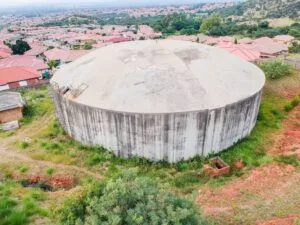
Internal lining of a leaking concrete potable-water reservoir using 720 g/m² reinforced PVC over 400 g/m² protection geotextile. The reservoir held water on its first fill test, restoring community supply within days.
Submit your BOQ.
Get a quote – not just a price.
Upload your BOQ or speak to our technical team for expert recommendations and support.