
Straw SoilLock 300 - 300gsm Agricultural Straw Erosion Control Blanket
Straw SoilLock 300 is a 300gsm Type 1D agricultural straw erosion control blanket sewn between two photodegradable polypropylene nets. Supplied in 2.4m x 50m rolls for slope stabilisation, embankment protection, channel lining, and vegetation establishment on civil, infrastructure, and environmental projects across Africa. Tested to ASTM D6818 and ASTM D6525. Functional longevity of up to 12 months. Zero plastic residue - biodegrades completely in service.
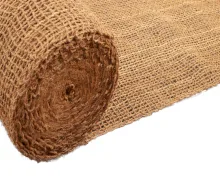
Technical Specification of Straw SoilLock 300 - 300gsm Agricultural Straw Erosion Control Blanket
Straw SoilLock 300 is a high-performance biodegradable erosion control blanket engineered from 100% agricultural straw fibre, sewn between two lightweight photodegradable polypropylene nets on 50mm centres using biodegradable yarn. Classified as a Type 1D erosion control blanket, it is designed for temporary slope and channel protection while vegetation establishes.
Once unrolled and pegged directly onto prepared soil, Straw SoilLock 300 immediately intercepts rainfall impact, reduces surface runoff velocity, prevents seed displacement, and creates a protected microenvironment for germination. The straw fibre matrix retains surface moisture - a critical performance factor on exposed slopes in Africa's variable rainfall zones - while the photodegradable net maintains structural integrity during the establishment period.
As vegetation roots and canopy develop, the blanket degrades progressively in service, adding organic matter to the soil and leaving behind a stabilised, vegetated surface with zero plastic residue. No removal is required. No synthetic material remains.
Straw SoilLock 300 is widely specified on road and highway embankments, municipal stormwater channels, mine rehabilitation slopes, and post-construction revegetation programmes. It is accepted on projects requiring biodegradable, non-toxic, and natural erosion control materials and aligns with standard ASTM-referenced erosion control specifications used by engineers and environmental consultants across sub-Saharan Africa.
Typical Values for EROSION CONTROL GEOCELLS
Properties & Dimensions
| Property | Straw SoilLock 300 |
|---|---|
| Material | 100% Agricultural straw fibre |
| Construction | Straw fibre matrix - sewn between two PP nets - 50mm centres |
| Weight | 300 g/m2 |
| Width | 2.4m |
| Roll Length | 50m |
| Thickness | 5-6mm (ASTM D6525) |
| Tensile Strength MD | 1.52 kN/m (ASTM D6818) |
| Tensile Strength TD | 1.03 kN/m (ASTM D6818) |
| Netting | Photodegradable polypropylene - both sides |
| Stitching | Biodegradable yarn - 50mm centres |
| ECTC Classification | Type 1D |
| Functional Longevity | Up to 12 months - climate and soil dependent |
| Residue | Zero - fully organic |
Popular Catalogue Items
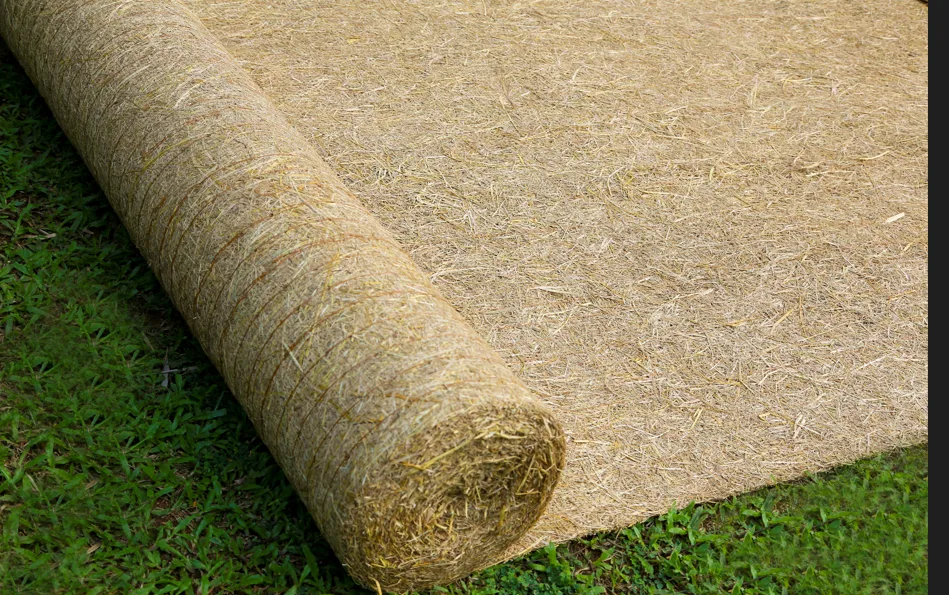
Straw Erosion Control Blanket – Straw SoilLock 300 (ECTC Type 1.D)
Straw erosion control blanket, 300 gsm double-net to ECTC Type 1.D, in 2.4 m × 50 m rolls covering 120 m². Biodegradable slope protection that holds seed and soil until grass takes over. Stocked in South Africa for delivery across Africa.Related Product Groups
Three Questions To Ask Before You Order
1.What is Straw SoilLock 300 classified as?
2.How long does Straw SoilLock 300 last in the field?
3.Does it need to be removed after vegetation is established?
4.Can it be installed over seed?
5.Is it suitable for channel applications?
6.What anchorage method is required?
Specification For The Design, Installation Of Straw SoilLock 300 - 300gsm Agricultural Straw Erosion Control Blanket
Surface Preparation - Grade and compact the slope surface before installation. Remove rocks, debris, and loose material that would prevent full contact between the blanket and the soil. Fine-grade the surface - poor contact allows water to channel beneath the blanket, which is the primary cause of installation failure.
Seeding - Seed can be applied before or after blanket installation. Pre-seeding is preferred on steep slopes where post-installation broadcast is difficult. Hydroseed application over the installed blanket is effective and widely used on large embankment and rehabilitation projects.
Unrolling - Unroll parallel to the slope contour (horizontally across the slope), not top-to-bottom. Begin at the top anchor trench and unroll downslope. Keep the blanket in firm contact with the soil surface throughout - do not allow bridging over irregularities.
Trenching and Anchorage - Dig anchor trenches at the top and bottom of the slope, minimum 300mm deep x 300mm wide. Fold the blanket into the trench, backfill, and compact. Peg through the blanket at the trench edge. Intermediate check slots should be installed at regular intervals on slopes longer than 3m.
Pegging - Peg the blanket face at 1m² intervals using steel U-pins or biodegradable wooden stakes with a minimum leg length of 300mm. Increase peg density on steep slopes and in areas of concentrated flow. All pegs must be driven flush with the blanket surface.
Overlaps - Where rolls join, overlap a minimum of 150mm in the machine direction and 300mm at roll ends. Peg through the overlap zone at maximum 500mm centres. On steep slopes, shingle overlaps downslope (upper roll overlaps lower roll) to prevent water ingress beneath the joint.
Featured Projects Across Africa
Related Resources
Common STRAW CELLULOSE EROSION BLANKET Applications
Request a Quote for This Product Family
Upload your BOQ, drawings, or specifications and our technical team will provide a detailed proposal.
Have a project? Start with us.
Get expert engineering support, reliable material supply, and best-in-class installation.