
Damp Proof Membrane (DPM) & Construction Plastic Sheeting
SABS-approved DPM, builders plastic and black polythene sheeting to SANS 952, for use under slabs, foundations, basements and civil works. Available in 250, 375 and 500 micron grades (1000, 1500 and 2000 gauge) in 3 m and 6 m widths, with jumbo rolls for large projects and delivery across Africa.
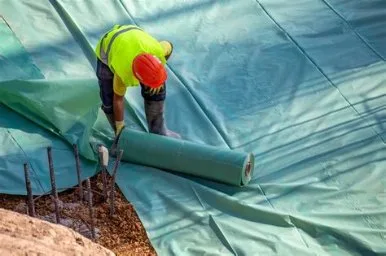
Technical Specification of Damp Proof Membrane (DPM) & Construction Plastic Sheeting
Damp proof membrane (DPM), also called construction plastic, builders plastic, black plastic sheeting or polythene sheeting, is the moisture barrier laid under concrete floor slabs and foundations to stop ground moisture rising into a building. Its partner product, damp proof course (DPC), is built into brick and block walls to stop damp travelling up through the masonry. Together they keep floors, walls and finishes dry for the life of the building.
Laid under a slab, DPM does two jobs. It blocks rising moisture from the ground, and it stops the ground from drawing water out of the fresh concrete, which helps the slab cure properly and reach full strength. Heavier grades are also used for tanking, the waterproofing of basements, retaining walls and lift pits. DPC is laid at plinth level, at least 150 mm above finished ground level, and should link up with the DPM so there is no gap in the barrier.
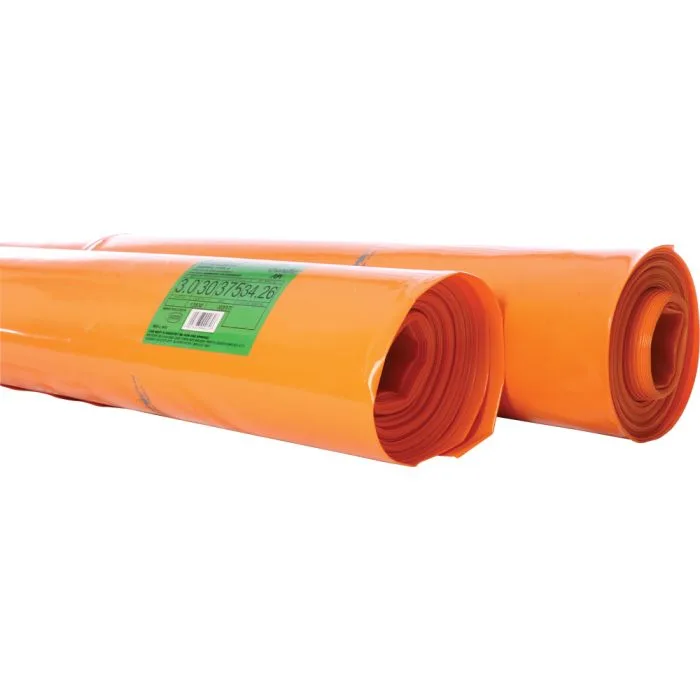
Our range covers every common grade. 250 micron (1000 gauge) black sheeting is the standard choice for residential slabs and general building work. 375 micron (1500 gauge) orange tank membrane is made for basement tanking and below-ground waterproofing. 500 micron (2000 gauge) black sheeting is the heavy-duty option for industrial, warehouse and mining floors. Green under-surface membrane and polyethylene DPC complete the range.
Our construction sheeting is SABS-marked to SANS 952, the South African standard for polymer film used for damp proofing and waterproofing in buildings. The same products are known by different names across Africa: 1000 gauge polythene in Kenya, Uganda and Tanzania, DPM nylon in Nigeria, film polyéthylène sous dallage in Francophone countries and lona plástica in Angola and Mozambique. Whatever your specification calls it, we supply the matching grade.
Sheeting is available in 3 m and 6 m widths on standard 30 m rolls, with 100 m jumbo rolls for large slabs, warehouses and mining projects. Wider, longer rolls mean fewer joints and laps across a slab, which saves installation time, reduces taping and removes the weak points where water gets through.
A DPM is only as good as its installation. The base should be smooth and blinded with sand so sharp stones cannot puncture the sheet. Joints must be lapped and taped, any tears patched before the concrete is poured, and edges turned up at the slab perimeter. We supply from stock with delivery across Africa, and our teams can advise on the right grade for your specification or install the membrane on site.
Typical Values for WATERPROOFING CONCRETE PROTECTION
Properties & Dimensions
| Product | Reference | 250 µm Black | 250 µm Green | 375 & 500 µm Orange | 500 µm Black |
|---|---|---|---|---|---|
| Material | - | LDPE | LDPE | LDPE | LDPE |
| Standard | SANS 952 | SABS Type F | SABS Type C | SABS Type A | SABS, Type C |
| Nominal Thickness | SANS 952 | 250 µm (0.25 mm) | 250 µm (0.25 mm) | 375 µm (0.375 mm) / 500 µm (0.50 mm) | 500 µm (0.50 mm) |
| Gauge Equivalent | µm × 4 | 1000 gauge | 1000 gauge | 1500 / 2000 gauge | 2000 gauge |
| Specified Use | SANS 10021 | Under-slab DPM on dry sites | Under-slab DPM | Basement and below-ground tanking | Semi-basements and low hydrostatic pressure |
| Minimum Lap | Agrément SA | 100–150 mm (by wall thickness) | 100–150 mm (by wall thickness) | 100–150 mm (by wall thickness) | 100–150 mm (by wall thickness) |
| Sand Blinding | SANS 10021 | ≥ 50 mm, well tamped | ≥ 50 mm, well tamped | ≥ 50 mm, well tamped | ≥ 50 mm, well tamped |
| Joints | SANS 10021 | Lapped, sealed, turned up at walls | Lapped, sealed, turned up at walls | Lapped, sealed | Lapped, sealed, turned up at walls |
| Roll Lengths | - | 30 m, 100 m (jumbo) | 30 m | 30 m | 30 m |
| Roll Widths | - | 3 m, 6 m | 1 m, 2 m, 3 m, 4 m | 3 m, 4 m | 3 m, 6 m |
Popular Catalogue Items

Related Product Groups
Three Questions To Ask Before You Order
1.What is the difference between a DPC and a DPM?
2.What micron thickness do I need for my project?
3.Why does colour (Black, Green, Orange) matter - is it just cosmetic?
4.What are Jumbo rolls and when should I use them?
5.Is your sheeting SABS approved, and can I get proof for building inspection?
6.Can black sheeting be used instead of orange for basement waterproofing?
Specification For The Design, Installation Of Damp Proof Membrane (DPM) & Construction Plastic Sheeting
Lay DPM sheeting in the widest practical widths to minimise the number of joints across the slab area. The membrane should be turned up at the perimeter and dressed against all load-bearing walls, forming a continuous barrier between the ground and the concrete pour — not a series of disconnected sheets. This is the standard laying method for SABS-approved Type C construction sheeting under SABS 952-1:2011.
Where two sheets meet, overlap the joint by a minimum of 100mm and seal it with a compatible jointing tape, pressed down firmly along the full length of the lap
For basement tanking and vertical waterproofing applications, one layer of 375 micron Hyperlastic Orange sheeting is installed bearing SABS 952-1:2011 Type A certification. All joining on this application must be carried out strictly in accordance with the installation instructions supplied with the product - tanking performance is more sensitive to correct sealing than standard under-slab DPM.
Inspect sheeting for punctures or tears caused by reinforcing steel, sharp aggregate, or site traffic before the concrete pour, and patch any damage with matching jointing tape immediately - a single unpatched puncture can compromise the entire moisture barrier. Store and handle rolls to limit unnecessary UV exposure prior to laying, and avoid dragging sheeting over abrasive surfaces during placement.
Featured Projects Across Africa
Related Resources
Common DAMP PROOF MEMBRANE DPM CONSTRUCTION PLASTIC SHEETING 250 375 500 MICRON Applications
Request a Quote for This Product Family
Upload your BOQ, drawings, or specifications and our technical team will provide a detailed proposal.
Have a project? Start with us.
Get expert engineering support, reliable material supply, and best-in-class installation.