
Eurobent Reinforced Sodium Bentonite GCL - 3500 to 6000 g/m2
Eurobent Reinforced Sodium Bentonite GCL is a mechanically bonded geosynthetic clay liner consisting of granular sodium bentonite with minimum 75% montmorillonite content, needle-punched between a 100 g/m2 PP woven carrier layer and a 200 g/m2 PP nonwoven cover layer. Available in five grades from 3500 g/m2 to 6000 g/m2 net bentonite content. Permeability of 5.0 x 10⁻¹¹ m/s or less across all grades. Self-sealing. Self-healing. CE marked. Compliant with EN 13361, EN 13492, EN 13493, and EN 15382. Supplied in 5.1m wide rolls. Stocked in South Africa for immediate dispatch to 30+ African countries. Supply only or supply and install by IAGI member installer.
Technical Specification of Eurobent Reinforced Sodium Bentonite GCL - 3500 to 6000 g/m2
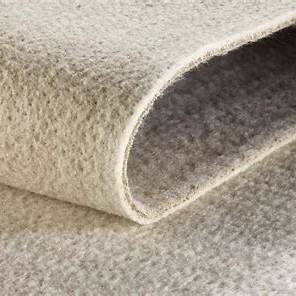
Eurobent Reinforced Sodium Bentonite GCL is a factory-manufactured hydraulic barrier consisting of granular sodium bentonite clay mechanically bonded between two polypropylene geotextile layers by needle-punching. The needle-punching process incorporates staple fibres from the nonwoven cover layer through the sodium bentonite clay layer into the woven carrier layer matrix - creating a composite that is resistant to peeling, prevents bentonite displacement inside the mat, and guarantees even distribution of bentonite across the entire GCL surface. This uniform distribution ensures that the waterproofing properties of the liner are consistent across every square metre of the installed area - not just at the points of highest bentonite concentration.
When hydrated under confining stress from cover soil, the sodium bentonite swells to form a dense, gel-like, self-sealing barrier with hydraulic conductivity of 5.0 x 10⁻¹¹ m/s or less across all five Eurobent grades. This permeability is equivalent to or better than a 600mm thick compacted clay liner - achieved at 6 to 8mm installed thickness. The barrier performs identically regardless of which grade is specified. What changes between grades is the net bentonite content - from 3500 g/m2 to 6000 g/m2 - selected by the engineer based on hydraulic head, leachate chemistry, regulatory requirement, and design life. The barrier specification is not compromised by selecting a lower grade - it is sized to the project requirement.
The self-sealing and self-healing characteristic of Eurobent GCL is its defining advantage over geomembrane-only liner systems. Minor installation damage, small punctures, and tears below a critical size self-seal as the bentonite hydrates and swells under confining stress - defects that would remain permanent breaches in a geomembrane become sealed by the swelling bentonite matrix. This self-healing behaviour provides inherent redundancy in composite liner systems where geomembrane is the primary element and GCL is the secondary barrier - a redundancy that no synthetic liner system alone can deliver. On African construction sites where installation conditions are often difficult and substrate preparation imperfect, this self-healing characteristic is a critical performance reserve.
Eurobent GCL is manufactured by Thrace Group with annual GCL production capacity exceeding 3 million m2. Every roll is tested in-house and supplied with a manufacturer Internal Test Report (ITR) containing traceable quality data for unit surface weight, thickness, moisture content, tensile strength, elongation, CBR puncture resistance, and permeability. Index flux and permeability are tested monthly to ASTM D5887 and EN 16416. Every roll is visually inspected, labelled to EN ISO 10320, and packed in a UV-resistant plastic sleeve. GCL rolls delivered to project sites must match the ITR roll numbers - a mandatory CQA requirement on all regulated containment projects.
Geosynthetics Africa stocks the full Eurobent GCL range in South Africa and maintains established logistics routes to over 30 African countries - providing engineers, procurement officers, and asset owners across the continent with a fully specified, CE marked, EN-tested GCL with same-week dispatch capability and no extended European lead times. Supply-only is available for projects with approved third-party installers. Full supply-and-install is available with experienced IAGI member installation teams, site-specific method statements, CQA inspection support, and post-installation hydration management. One supplier. One point of contact. Pan-African execution certainty from specification through to installed and covered liner.
Typical Values for GEOSYNTHETIC CLAY LINERS GCL
Properties & Dimensions
| Property | Test Method | EB 3500 | EB 4000 | EB 4500 | EB 5000 | EB 6000 |
|---|---|---|---|---|---|---|
| Net bentonite content | EN 14196 | 3500 g/m2 | 4000 g/m2 | 4500 g/m2 | 5000 g/m2 | 6000 g/m2 |
| Total GCL mass | EN 14196 | 3800 g/m2 (+-10%) | 4300 g/m2 (+-10%) | 4800 g/m2 (+-10%) | 5300 g/m2 (+-10% | 6300 g/m2 (+-10%) |
| Thickness | EN ISO 9863-1/-2 | 5.8mm (+-1mm) | 6.6mm (+-1mm) | 6.8mm (+-1mm) | 7.4mm (+-1mm) | 7.8mm (+-1mm) |
| Index Flux | ASTM D5887 | <=5.0x10⁻⁹ m3/m2/s | <=5.0x10⁻⁹ m3/m2/s | <=5.0x10⁻⁹ m3/m2/s | <=5.0x10⁻⁹ m3/m2/s | <=5.0x10⁻⁹ m3/m2/s |
| Permeability | ASTM D5887 | <=5.0x10⁻¹¹ m/s | <=5.0x10⁻¹¹ m/s | <=5.0x10⁻¹¹ m/s | <=5.0x10⁻¹¹ m/s | <=5.0x10⁻¹¹ m/s |
| Tensile Strength MD | EN ISO 10319 | >=10.4 kN/m | >=10.4 kN/m | >=10.4 kN/m | >=10.4 kN/m (-1kN/m) | >=10.4 kN/m (-10%) |
| Tensile Strength CMD | EN ISO 10319 | >=8.5 kN/m | >=8.5 kN/m | >=8.5 kN/m | >=8.5 kN/m (-0.8kN/m) | >=8.5 kN/m (-10%) |
| CBR Puncture Strength | EN ISO 12236 | >=1.8 kN | >=1.8 kN | >=1.8 kN | >=1.8 kN (-0.18kN) | >=1.8 kN (-10%) |
| Peel Strength | ASTM D6496 | >=60 N/10cm | >=60 N/10cm | >=60 N/10cm | >=60 N/10cm (-6N/10cm) | >=60 N/10cm (-10%) |
| Montmorillonite | CUR 33 | >=75% | >=75% | >=75% | >=75% | >=75% |
| Swell Index | ASTM D5890 | >=24 ml/2g | >=24 ml/2g | >=24 ml/2g | >=24 ml/2g | >=24 ml/2g |
| Roll width | - | 5.1m | 5.1m | 5.1m | 5.1m | 5.1m |
| Roll length | - | 40m (+-1%) | 40m (+-1%) | 40m (+-1%) | 40m (+-1%) | 35m (+-1%) |
| Roll area | - | 204m2 | 204m2 | 204m2 | 204m2 | 178.5m2 |
Popular Catalogue Items
GCL Bentonite Geosynthetic Clay Liner (3500–6000 g/m²)
3500 t0 6000 g/m² Bentonite Thickness GradesRelated Product Groups
Three Questions To Ask Before You Order
1.How do I select the correct Eurobent grade for my project?
2.What permeability does Eurobent GCL achieve and how does it compare to compacted clay?
3.Does Eurobent GCL self-heal if damaged during installation?
4.What subgrade preparation is required before Eurobent GCL installation?
5.What is the minimum overlap required between Eurobent GCL panels?
6.Can Eurobent GCL be installed in wet conditions or during rain?
7.What QA documentation is supplied with each Eurobent GCL roll?
8.Do you provide installation or supply only?
Specification For The Design, Installation Of Eurobent Reinforced Sodium Bentonite GCL - 3500 to 6000 g/m2
Eurobent GCL installation requires specific competence and must not be treated as a general civil works task. The two most common causes of GCL liner breach on African containment projects are premature hydration without confining stress and inadequate seam overlap. Both are preventable with correct procedure and competent supervision. Geosynthetics Africa provides experienced IAGI member installation teams and site-specific method statements for every installation project.
1. Subgrade Preparation - Strip and compact the subgrade to the engineer-approved formation level. Remove all sharp rocks, organic matter, and objects larger than 50mm. Compact to minimum 90% Proctor density - the surface must be smooth and free of ruts deeper than 25mm. Proof-roll and repair any weak or soft areas. Obtain written engineer approval of the subgrade before any GCL is deployed.
2. Roll Handling and Delivery Inspection - Visually inspect each roll when unloaded to confirm packaging and material integrity. Minor packaging tears must be repaired with moisture-resistant tape before storage. Rolls with visible material damage must be marked, set aside, and examined before deployment. Do not remove the UV-resistant plastic sleeve until immediately before deployment. Insert a steel core through the roll during unloading to prevent bending. Do not stack rolls more than 4 high. Store on pallets - not directly on ground. Cover with tarpaulin if stored outdoors.
3. Deployment and Panel Orientation - Confirm the correct GCL orientation with the project engineer before deployment - woven carrier layer down, nonwoven cover layer up, unless otherwise specified. Unroll from the bottom rather than pulling the flap from the top. Do not allow rolls to unroll freely down slopes - control the unrolling rate. Place longitudinal seams parallel to the slope direction. End seams must be located at minimum 1m from the toe and crest of slopes steeper than 4H:1V. Place panels flat without folds - particularly at uncovered edges. Equipment must not move directly on unprotected GCL - lightweight ATVs with maximum 21.5 kPa bearing pressure only.
4. Seam Overlaps and Bentonite Powder Application - Overlap all panel edges by minimum 300mm - use the overlap guideline and match-line imprinted on both panel edges to confirm accuracy. Apply bentonite powder from the supplied 20kg bag uniformly across the full 300mm overlap width before placing the overlapping panel. One 20kg bag is supplied per roll for standard overlaps - one bag per three rolls for prefabricated overlap rolls. Do not install panels in standing water or during rain. Seam overlap dimensions and bentonite powder application must be verified and recorded by the CQA inspector for each seam.
5. Anchor Trench Construction - Excavate anchor trenches at all perimeter edges, slope crests, and toes to the dimensions specified by the project engineer. Fold the GCL edge into the trench, backfill with approved material, and compact. The anchor trench is a structural element of the liner system - inadequate anchorage allows liner uplift under hydraulic head and is a primary cause of liner system failure on slopes and embankments. All anchor trench construction must be documented in the CQA record with dimensions and photographs.
6. Cover Placement and Hydration - Cover soil must be placed over the GCL immediately after installation - at the end of every working day at minimum. Place cover soil maintaining minimum 300mm of cover between equipment tyres or tracks and the GCL at all times - 600mm minimum in high-traffic areas and roadway zones. Move cover soil upslope rather than downslope to minimise tensile forces on the liner. Hydration under confining stress from cover soil is normally accomplished naturally by rainfall and moisture absorption from the soil. Manual hydration by flooding or irrigation may be required in dry climates or where non-aqueous liquid containment is the primary function.
Featured Projects Across Africa
Related Resources
Common REINFORCED SODIUM BENTONITE GEOSYNTHETIC CLAY LINERS Applications
Request a Quote for This Product Family
Upload your BOQ, drawings, or specifications and our technical team will provide a detailed proposal.
Have a project? Start with us.
Get expert engineering support, reliable material supply, and best-in-class installation.