
MIRAFI® - NON-WOVEN VIRGIN POLYPROPYLENE GEOTEXTILES
Four purpose-engineered MIRAFI® continuous-filament needle-punched nonwoven geotextile systems from Solmax - the world's largest geosynthetics manufacturer. MIRAFI® S for separation and filtration in roads, drainage and trafficked areas on weak soils. MIRAFI® F for two-layer anti-clogging hydraulic filtration with certified low clogging risk. MIRAFI® P for geomembrane liner protection from 200 g/m² to 1,200 g/m² with CBR puncture resistance up to 11.3 kN. MIRAFI® AR for abrasion-resistant railway ballast separation - Vibrogir-tested with SNCF French Railways to 20-year mechanical sustainability at 100,000 tonnes per day. All manufactured from 100% UV-stabilised virgin polypropylene continuous filaments. All ASQUAL certified. Supplied and installed across 30+ African countries.
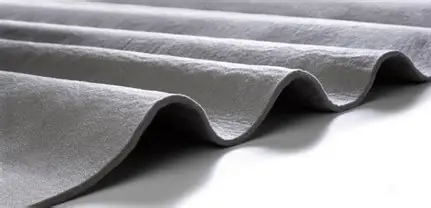
Technical Specification of MIRAFI® - NON-WOVEN VIRGIN POLYPROPYLENE GEOTEXTILES
Geosynthetics Africa supplies and installs the full MIRAFI® nonwoven geotextile range from Solmax: four continuous-filament needle-punched systems, each engineered for a specific primary function across civil, mining, hydraulic, environmental and railway infrastructure. Every grade is manufactured from 100 % UV-stabilised virgin polypropylene, and the range is ASQUAL certified and CE marked.
MIRAFI® S is a mechanically bonded continuous-filament nonwoven with a fifty-year track record in the separation and filtration of trafficked areas over weak soils, and as a filter in drainage systems. Nine grades from S21 to S82 span 90 to 385 g/m², with tensile strength from 6 to 30 kN/m and CBR puncture resistance from 1.05 to 4.50 kN. Grade selection follows subgrade condition, traffic loading and aggregate particle size - the weaker the subgrade and the heavier the traffic, the higher the required tensile strength. This is the workhorse of the range: road and rail platforms, drainage trenches, construction access and general separation duty.
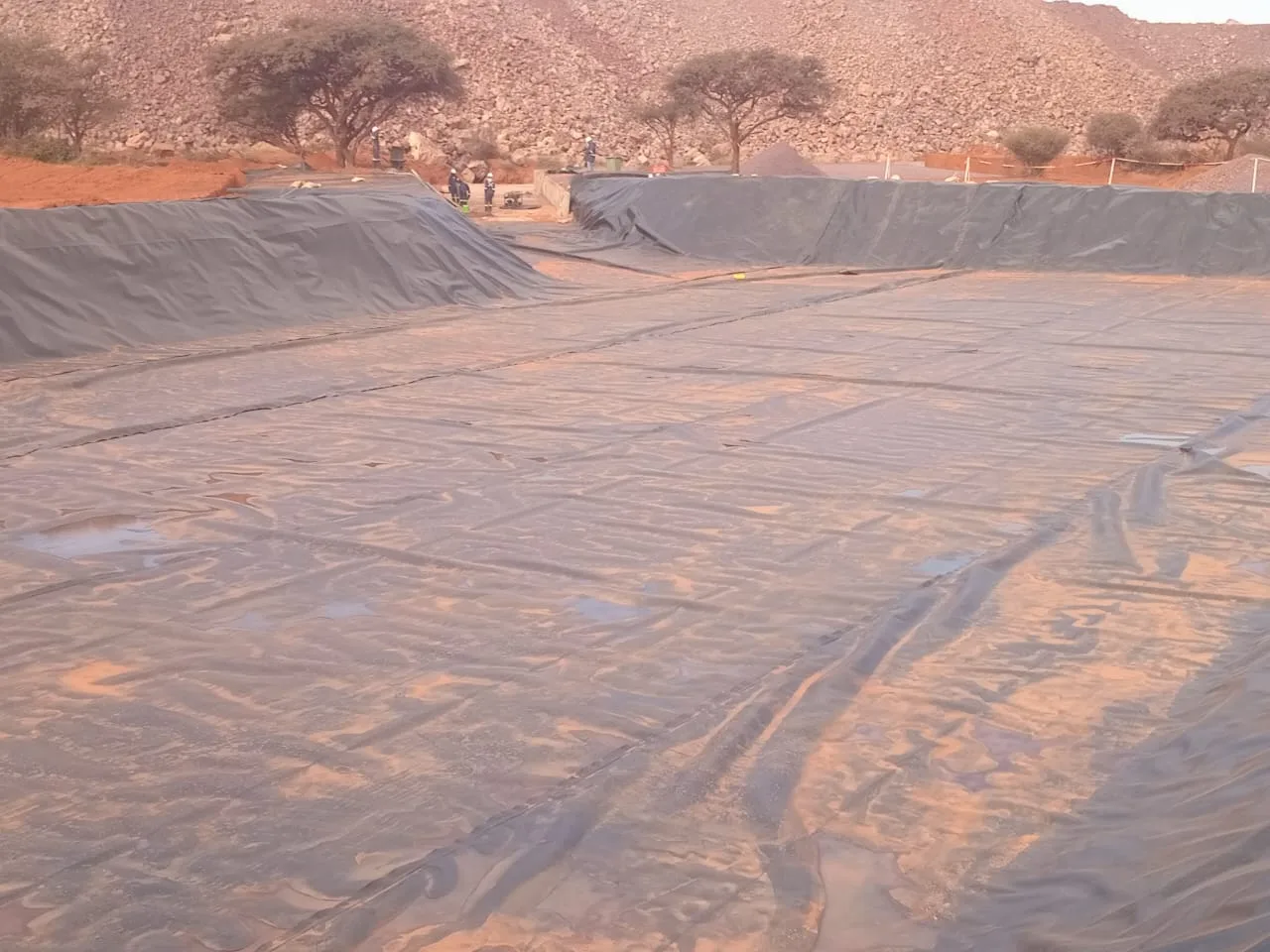
MIRAFI® P is a needle-punched nonwoven developed specifically for geomembrane protection, in nine grades from 200 to 1200 g/m². Where a general-purpose nonwoven protects incidentally, P is certified against EN 13719 for protection efficiency - deformation at 300 kPa improving from 1.7 % to 0.6 % across the range - and that figure, rather than mass, is what a liner designer specifies against. Tensile strength runs from 16 to 80 kN/m and CBR puncture resistance from 2.40 to 11.30 kN. The duty is cushioning the liner against puncture from the subgrade below and the drainage or ballast layer above, in tailings storage facilities, heap leach pads, landfill cells, reservoirs and dams.
MIRAFI® F takes a different approach to filtration: a two-layer construction in which one layer acts as the filter and the second protects it from damage, producing 25 to 40 constrictions through the filter layer. Clogging rather than rupture is how a filter geotextile usually fails, and separating the two duties lets the filter layer be optimised for retention while the protective layer absorbs the mechanical abuse. Three grades from 400 to 800 g/m² deliver tensile strength of 30 to 40 kN/m with opening sizes tightening from 90 to 80 µm. All three retain over 80 % of strength under UV testing to EN 12224 and resist the chemical agents and microorganisms usually occurring in seas and rivers - which is why F is specified for marine and riverine filtration, revetments, scour protection and permanent drainage where the filter has to work for decades without maintenance access.
MIRAFI® AR20 is a continuous-filament nonwoven incorporating an abrasion-resistant additive and UV stabiliser, developed with major European railway authorities for the extreme mechanical stresses at the ballast interface. Performance was validated by the vibrogir test with SNCF French Railways, in which ten hours of loading corresponds to one year of traffic at 100,000 load tons per day. After 200 hours - the equivalent of twenty years - pyramid-puncture testing confirmed no loss in puncture resistance, with no major decrease in permeability or flow rate. As a separator between ballast and filter blanket it keeps the ballast clean, reducing both ballast-cleaning frequency and tamping.
Typical Values for GEOTEXTILE FABRICS
Properties & Dimensions
| Property | Test Method | MIRAFI® S | MIRAFI® F | MIRAFI® P | MIRAFI® AR |
|---|---|---|---|---|---|
| Mass per Unit Area | EN ISO 9864 | 90–385 g/m² | 400–800 g/m² | 200–1,200 g/m² | - |
| Tensile Strength MD | EN ISO 10319 | 5–30 kN/m | 30–40 kN/m | 16–80 kN/m | - |
| CBR Puncture Resistance | EN ISO 12236 | 0.7–4.5 kN | 4.6–7.0 kN | 2.4–11.3 kN | |
| Opening Size O90 (CMD) | EN ISO 12956 | 85–135 µm | 80–90 µm | 70–110 µm | 55 µm |
| Permeability | EN ISO 11058 | 55–180 mm/s | 30–60 mm/s | 10–90 mm/s | 10 mm/s |
| Abrasion Resistance | ASTM D3884 | - | - | - | Tested |
| Mechanical Sustainability | Vibrogir (SNCF) | - | - | - | Up to 20 yrs @ 100,000 t/day |
| Liner Protection Efficiency | EN 13719 | - | - | 0.6–1.7% @ 300 kPa | - |
| ASQUAL Certification | - | ✓ S21–S82 | ✓ F60–F80 | ✓ P20–P120 | - |
| Roll Width | - | 2–6 m | 6 m | 6 m (5.2–5.4 m heavy grades) | 3.5–4 m |
Popular Catalogue Items
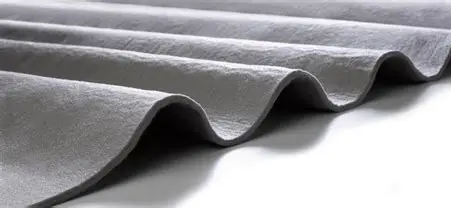
Mirafi® P - Geomembrane Liner Protection Geotextile
100 % UV-stabilised polypropylene, 200 to 1200 g/m²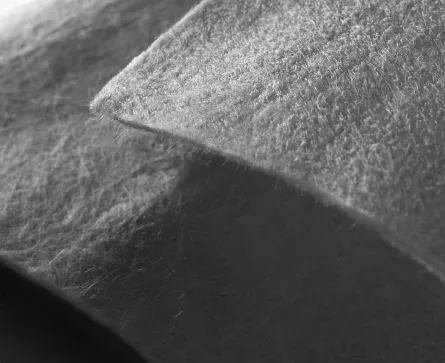
Mirafi® S - Nonwoven Separation & Filtration Geotextile
100 % UV-stabilised polypropylene, 70 to 385 g/m²
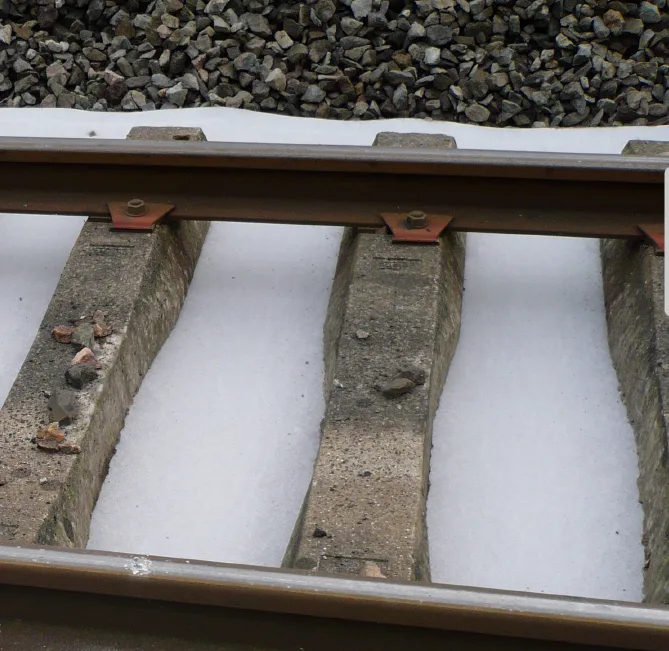
Mirafi® AR20 - Abrasion Resistant Geotextile
Nonwoven with an abrasion-resistant additive and UV stabiliserRelated Product Groups
Three Questions To Ask Before You Order
1.Why specify MIRAFI® over recycled polyester nonwoven geotextiles?
2.What is the difference between MIRAFI® S, F, P and AR - and how do I choose?
3.What does ASQUAL certification mean and why does it matter?
4.Are MIRAFI® nonwovens suitable for geomembrane liner protection in TSF and landfill applications?
5.Does Geosynthetics Africa install MIRAFI® geotextiles or supply only?
Specification For The Design, Installation Of MIRAFI® - NON-WOVEN VIRGIN POLYPROPYLENE GEOTEXTILES
Subgrade Preparation - Prepare a smooth, stable subgrade free from sharp objects, large stones, roots and debris that could damage the geotextile during installation.
Geotextile Placement - Unroll directly onto the prepared surface without wrinkles or folds, ensuring full contact with the underlying ground and correct panel orientation.
Overlaps & Seaming - Provide overlaps in accordance with project specifications and ground conditions. Increase overlap widths or use sewn seams where very weak subgrades are encountered.
Aggregate Placement - Place cover material carefully to prevent displacement or damage to the geotextile. Do not allow construction traffic directly on exposed geotextile unless specified by the engineer.
Featured Projects Across Africa
Related Resources
Common POLYPROPYLENE NON WOVEN GEOTEXTILES Applications
Request a Quote for This Product Family
Upload your BOQ, drawings, or specifications and our technical team will provide a detailed proposal.
Have a project? Start with us.
Get expert engineering support, reliable material supply, and best-in-class installation.