
Hessian Jute Curing Cloth (Burlap) for Concrete
Heavy-duty jute hessian (burlap, gunny cloth, toile de jute, serapilheira) in 213 and 270 gsm grades, installed by trained crews on slabs, columns, bridges and precast elements. Every pour is QA/QC-documented to AASHTO M 182, ACI 308, BS EN 13670 and SANS.
Technical Specification of Hessian Jute Curing Cloth (Burlap) for Concrete
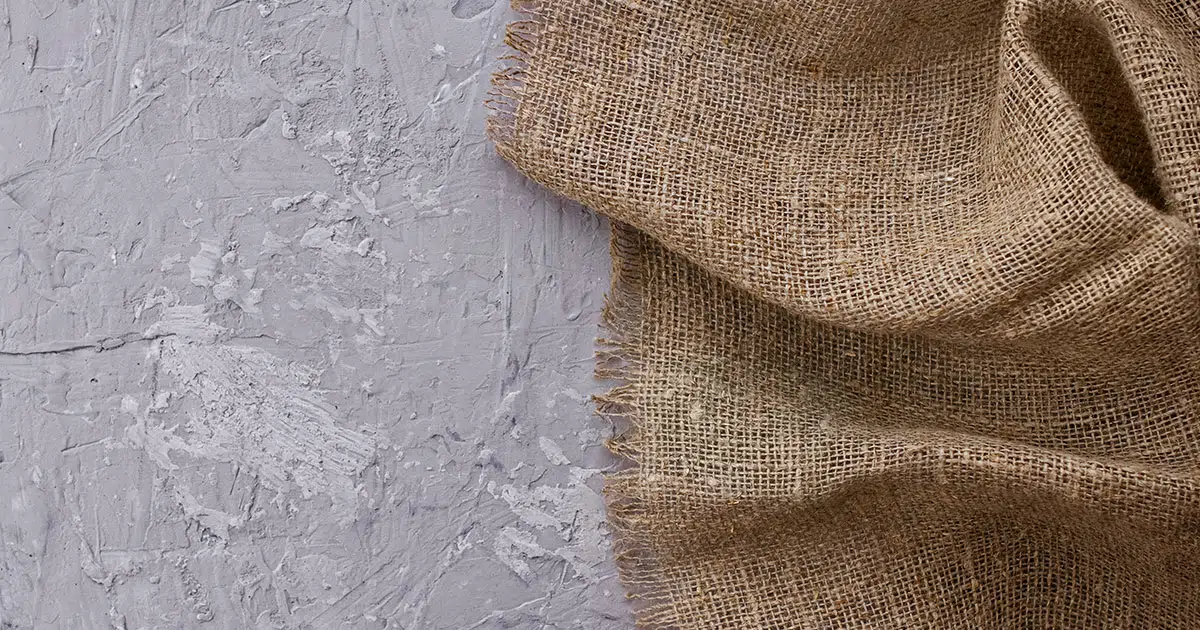
Hessian curing cloth, also called burlap, is a woven jute fabric that is soaked in water and laid over fresh concrete to keep it moist while the cement hydrates. The Portland Cement Association notes that wet coverings like hessian outperform curing compounds, and the material has its own specification, AASHTO M 182. Across Africa it goes by many names: hessian, burlap, jute sacking, gunny cloth, gunia, goiing, toile de jute, serapilheira and khaysh (خيش).
In hot sun, harmattan winds and low humidity, concrete loses water fast. Once its internal humidity drops to about 80%, hydration stops and the concrete may never reach full strength. That leaves weak surfaces, shrinkage cracks and early corrosion of the reinforcement. Wet hessian prevents this and also cools the concrete, whether it is used on slabs, columns, bridges, pavements or water-retaining structures.
Hessian only works when it stays wet, and most curing failures happen on site, not in the fabric. That is why we supply, install and supervise it as one service. Our crews pre-rinse the cloth, overlap every joint, cover every edge and keep it wet for the full specified period. Every pour is backed by documented QA/QC records.
Typical Values for WATERPROOFING CONCRETE PROTECTION
Properties & Dimensions
| Property | CureLock™ Type I | CureLock™ Type II |
|---|---|---|
| Material | 100% natural jute | 100% natural jute |
| Weave | Plain weave hessian | Plain weave hessian |
| Mass per Unit Area | 213 g/m² | 270 g/m² |
| Warp Threads (Ends) | 38 per 100 mm | 47 per 100 mm |
| Weft Threads (Picks) | 31 per 100 mm | 47 per 100 mm |
| Breaking Load, Strip Test 100 × 200 mm (Warp) | 90 kg (883 N) | 110 kg (1079 N) |
| Breaking Load, Strip Test 100 × 200 mm (Weft) | 60 kg (589 N) | 95 kg (932 N) |
| Breaking Load, Grab Test 25 × 75 mm (Warp) | 29 kg (284 N) | 35.5 kg (348 N) |
| Breaking Load, Grab Test 25 × 75 mm (Weft) | 19 kg (186 N) | 30.5 kg (299 N) |
| Moisture Regain | 17% max | 17% max |
| Oil Content (dry de-oiled basis) | 3% max | 3% max |
| Concrete Curing Compliance - AASHTO M 182 | Jute burlap for curing concrete | Jute burlap for curing concrete |
Popular Catalogue Items

CureLock™ Concrete Curing Hessian (Burlap)
AASHTO M 182 Class 1 and Class Concrete Curing HessianRelated Product Groups
Three Questions To Ask Before You Order
1.What is hessian curing cloth, and is it the same as burlap?
2.How long should concrete be cured under hessian?
3.How often does the hessian need to be wetted?
4.Is hessian better than a curing compound?
5.Is hessian better than plastic sheeting?
Specification For The Design, Installation Of Hessian Jute Curing Cloth (Burlap) for Concrete
Step 1 – Supply and Prepare - Every roll is checked against its IS 2818 mill certificate for grade, width and cleanliness. New hessian is rinsed in clean water before use, and clean curing water, hoses and polythene covers are ready before the pour begins.
Step 2 – Install and Keep Wet. As soon as the concrete can take the cloth without marking, pre-soaked hessian is laid on slabs or wrapped around columns, with 150 mm overlaps and every edge covered. It stays wet, never allowed to dry out, for at least 7 days above 5°C, or longer if the project specification requires it.
Step 3 – Verify and Hand Over. Our supervisor logs every pour daily, recording the times the cloth was rewetted, the weather and photos, and fixes any dry spots immediately. At completion you receive a curing record pack with certificates, logs and sign-off as documented proof of proper curing.
Featured Projects Across Africa
Related Resources
Common CONCRETE CURING HESSIAN JUTE Applications
Request a Quote for This Product Family
Upload your BOQ, drawings, or specifications and our technical team will provide a detailed proposal.
Have a project? Start with us.
Get expert engineering support, reliable material supply, and best-in-class installation.